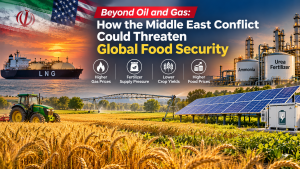
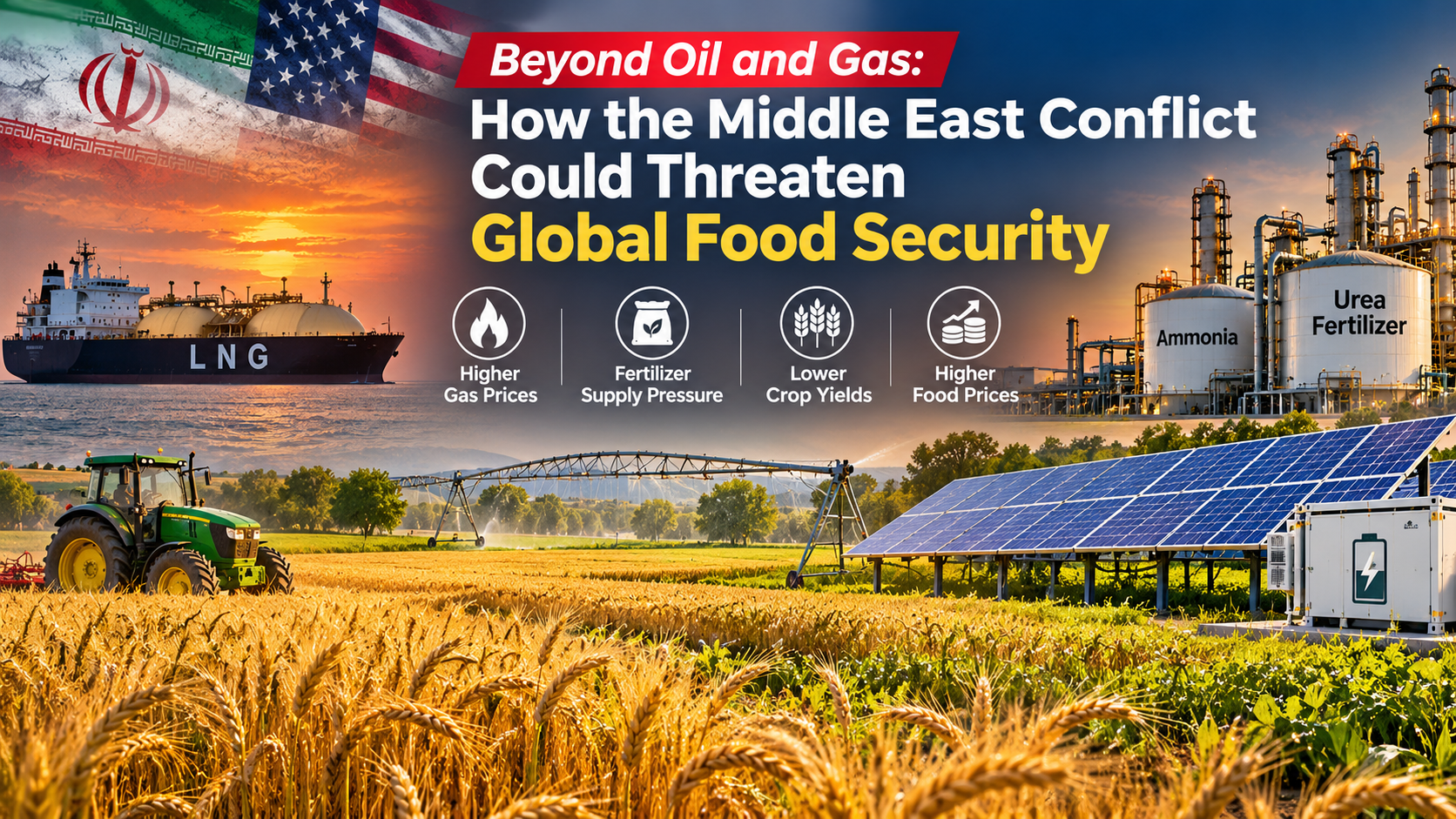
When people talk about energy crises, thoughts instantly go to rising fuel costs at the gas station or soaring electricity bills. But the ongoing conflict in the Middle East and the blockages around vital trade lanes like the Strait of Hormuz have triggered a quieter, much more dangerous threat: a global fertilizer squeeze that is hitting the world’s food supply.
Most people do not realize that modern agriculture runs on fossil fuels—not just to power tractors, but as the core ingredient to grow food. When energy markets break down, food security is never far behind.
The Invisible Link Between Gas and Grain
To understand why food prices are so sensitive to geopolitical conflicts, you have to look at how nitrogen fertilizers (like urea and ammonia) are made.
The production process relies heavily on natural gas. In fact, natural gas accounts for the vast majority of the cost of manufacturing nitrogen-based fertilizers. When regional conflicts disrupt gas supplies and shipping routes in major production hubs, fertilizer plants face immediate shortages and skyrocketing input costs.
The Middle East alone accounts for roughly one-fifth of global fertilizer production. When maritime traffic through key chokepoints is restricted, millions of tonnes of fertilizer get stuck or delayed. Unlike oil, the world does not have massive “strategic reserves” of fertilizer to fall back on when supply chains snap.
The Squeeze on Farmers and Grocery Shelves
Farmers buy seeds, fuel, and fertilizer months before they ever harvest or sell a crop. When a geopolitical crisis sends natural gas and fertilizer prices soaring overnight, it creates an immediate crisis for agricultural economics:
- Impossible Choices for Growers: Faced with doubled or tripled fertilizer prices, many farmers are forced to use less fertilizer than their fields need.
- Lower Crop Yields: Under-fertilized fields produce smaller harvests, setting the stage for tighter global grain and food supplies.
- Delayed Impact: Because farming operates on seasonal cycles, the full financial shock of an input crisis doesn’t hit grocery store shelves immediately—it usually arrives months later, driving up the cost of bread, meat, vegetables, and dairy.
For developing nations and import-dependent countries, these sudden price spikes can push basic nutrition out of reach for ordinary families.
Why Agri-Energy Integration Matters Now More Than Ever
For years, the phrase “agri-energy” usually meant turning food crops into biofuels. But today, the concept needs a complete makeover. Protecting global food security means breaking farming’s heavy reliance on imported fossil fuels and volatile gas markets.
How do we build a safer system?
- Local and Green Ammonia: Moving away from natural gas-dependent fertilizer by investing in green hydrogen and renewable-powered fertilizer production closer to home.
- Improving Soil Efficiency: Utilizing modern soil management and biological amendments so that plants make better use of every unit of fertilizer applied, reducing overall waste and cost.
- Decentralized Power on Farms: Expanding solar-powered irrigation and localized micro-grids so that individual farms are less vulnerable to sudden diesel and grid electricity shocks.
The Bottom Line
Energy security and food security are two sides of the same coin. As long as the global food chain depends on volatile fossil fuel markets and vulnerable shipping lanes, households everywhere will remain at the mercy of distant geopolitical conflicts.
Solving the next global food crisis requires looking past the farm gate and rethinking how we power agriculture from the ground up.